RSS

How To Create Your Own Rain Garden

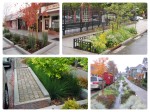
In this industrialize world, we face the effects of climate change and natural disaster such as typhoons, earthquakes and floods. These effects are the main reason why we take a conscious effort on conserving our environment and restoring what we have damage through time. As I have discussed on my previous post – Conserve Water Through Rain Gardens, rain gardening is one of the actions we have come up to somehow help the environment specially in urban areas. Through gardening, we may be able to somehow contribute on the restoration we aim. So as I have promised on my previous post here is my post on how to create your own rain garden.

rain gardens

Steps in Creating Your Own Rain Garden

Step 1: Choose Your Location

In choosing your location, consider the sunlight and its proximity in your house. While some opt to have their rain garden near their house, I wouldn’t suggest this for this may cause flooding in your house. Situate your rain garden away from the septic area as well. Choose a low spot in your garden or a spot that have a full or partial sunlight.

Step 2: Create a design for your garden

Planning is always the basic in every garden activity so plan your garden including the design you want, as well as its size. With these, you can visualize properly the garden you want to create.

e07837678deb3a8cd794c7046a0f244b

Step 3: Choose the plant for your rain garden

Be creative in choosing the plant but be sure that they can tolerate heavy rainfall as well as drought season. Native plant are perfect as well for they are well adapted in the conditions in your area. Visit your local garden store to help you pick out these plants. Be sure to pick out a variety to grasses and flowers to make it more appealing. Don’t forget to check your old seeds in your garden shed as well.

Step 4: Lay out and dig your garden

Start to lay out your garden based on the design you created. Then, contact a certified plumber or an expert if there is a need for modification and reconnection in the stormwater system in your area. Next, dig your garden for about 4 to 8 inches deep for drainage.

rain gardens

Step 5: Soil Preparation

Add soil with 2-3 inches of compost then mix it well. The compost. This will help a better drainage in your garden.

Step 6: Plant, Mulch

Based on your design, start to plant taking note on their distance from each other. Be sure to follow your design. After planting, put some mulch about 2 to 3 inches deep. You can choose shredded wood chips as a mulch but be sure that they won’t float. You can also put some pebbles for aesthetic effect. Then water your garden every other day if it doesn’t rain.

rain gardening

Step 7: Arrange rainwater tank or downpipes

Make sure that your downpipes and rainwater tanks overflow is connected to your rain garden. Attach a flow spreader at the end of the downpipes to evenly distribute the water. Water your garden every other day if it doesn’t until it can grow on its own.

There you have it! You can now create a garden you own rain garden and help on the conservation of water as well. Happy gardening.

 
3 Comments

Posted by on June 9, 2013 in Gardening


Tags: , , , , , , , ,

Dandelion: A Nutritious Weed

Featuring this plants as in my vegetable is really weird since I am not really a fan. Their presence in my garden equates to weeding so knowing more about dandelions is in some way an adventure. I found one in my backyard near the my gazebo and I just let them grow because of their blooms.

In search for a letter “D” in my vegetable library, I came across with dandelion which I knew as a weed and a flower. Little did I know that this misunderstood plant offers health benefits like other vegetables.  Indeed, dandelion is something you might want to grow in the garden (with control). So let us get to know more and be amaze about this plant.

General Facts:

dandyScientific Name: Taraxacum officinale (Asteraceae family)

Common name: Dandelion, lion’s tooth, monk’s head, telltime

Common Varieties:

  • French Dandelion a.k.a Vert de Montmagny Dandelion – early maturing variety with broad leaves.
  • Amélioré à Coeur Plein Dandelion – with its numerous, highly serrated leaves that form a dense tuft with a volume equivalent to that of an endive and a heart that tends to whiten naturally.
  • Improved Broad Leaved Dandelion
  • Arlington Dandelion
  • Improved Thick-Leaved Dandelion a.k.a Dandelion Ameliore

Plant Types: Perennial

Light: Partial Shade to full sun

Special Features: Edible

Propagation: Seed Read the rest of this entry »

 
6 Comments

Posted by on May 24, 2013 in General, Vegetable Library


Tags: , , , , , , ,

Conserve Water Through Rain Gardens

Due to climate change, we experience very long drought and heavy storms enough to cause flood. Not only that, urban development and water pollution caused decreasing groundwater thus leads to water shortage in near future. Fighting these problems gave birth to sustainable and environment friendly innovations people came up nowadays including rain gardens.

rain garden

What is a rain garden?

A rain garden is a shallow, constructed planted depression designed specifically to capture run off from hard surfaces such as roofs of your house and garages, driveways, and patios after the rains. Rain gardens filter and reduces the level of toxicity run off water before it goes to through the storm water drains then to the waterways. Through these rain garden, the amount of pollution reaching streams, creeks and rivers decreases up to 30 % .

Native deep-rooted plants, grass and flowers are commonly used in rain gardens for it adopt perfectly in the soil and climate condition in your area as well as provide habitat among native birds, butterflies, and beneficial insects.

rain gardens in Australia

rain gardens in Australia

Rain garden gains popularity all over the world specially Australia, United States of America and United Kingdom. In fact, major cities in Australia such as Melbourne and Sydney incorporate rain gardens principle in water saving and garden designs. Australian government specially in Melbourne strongly promotes rain garden that even in their streets they have rain gardens. Homeowners takes its part as well creating rain garden design in their backyard, garden and even beside their workshop. Just a quick tip, durable and high quality workshop are best find here: http://www.gardensheds.com.au/workshops.html.

How does a rain garden works?

Rains gardens captures storm water run off from hard surfaces enabling the water to slowly soak into the ground and be filtered. Beneath your rain garden are layers of sandy and organic soil. These layers slow down the rate of storm water entering our steams, creeks and rivers thus preventing erosion and local flooding. It also filters out large particles and assist in the removal of pollution such as nitrogen and phosphorus, dust, fertilisers and other contaminants. The plants, on the other hand, help to further filter out other contaminants before it gets to our rivers and creeks. Small amount of clay in the system will absorb pollutant like heavy metals and hydrocarbons.

street rain gardens

If you are worried of mosquitoes breeding in your garden, then worry no more. Rain garden are designed to drain the water within the day. Due to its design, rain gardens are self watering so its require low maintenance and less watering helping you conserve water as well as your energy.

Indeed, rain garden is a natural, easy, cost-effective and sustainable solution from flooding and pollution. Still not convince? Then watch out for my next post on How To Create Your Own Rain Garden and Its Different Types. If you have suggestion and idea about rain gardens then please do leave a comment.

 
5 Comments

Posted by on May 3, 2013 in Gardening


Tags: , , , , , , , ,

Tips on Sunburn Prevention During Camping

Enjoying the sun and outdoors are the things I enjoy during camping. That is why acquiring a sunburn is not new to me. Although non-life threatening, it can be very painful, itchy and uncomfortable that eventually ruins your camping trip. Not only that, bad sunburns can increase your risk of having a skin cancer in the future. Why? Sunburns are actually caused by UV rays from the sun. Overtime, the UV rays will damage the DNA on the skin causing cancer. Knowing these, sun protection is indeed a must in every outdoor activities you indulge specially camping.

camping

What are UV rays?

Ultraviolet (UV) rays is an invisible specter found in sunlight. When these reach reaches the skin it will cause skin damage, tanning and eventually burning. There are actually three type of UV rays namely UVA, UVB and UVC.

sunburn

  • UVA rays – Penetrating deeply in the skin, UVA causes skin aging, wrinkling, contribute to and even initiate the development of cancers. UVA rays passes effortlessly to the ozone layer and can penetrate through clouds and glass. It constitute about 95 percent of UV rays reaching in the Earth’s surface.
  • UVB rays – This dangerous rays is the one responsible for skin reddening, sunburn and damages the skin in mostly on epidermal layers. It plays a key role in developing skin cancer. UVB rays are absorbed in the ozone layer but some can pass through and reach the Earth’s surface.
 
1 Comment

Posted by on April 26, 2013 in Camping


Tags: , , , , , , , ,

(Nearly) Weedless Gardening Is Possible

Do you believe that it is possible to have a nearly weedless garden? It seems so surreal but in fact it is true. Posted on The Southern Illinoisan is an article of Lee Reich featuring his success on his weedless garden.

no tillage garden

The secret of having a weedless garden is to stop tilling your ground (step 1) . By doing so, the seed of the weed kept buried and dormant. Step # 2 says you must keep the soil intact and covered as a way of enriching the soil yet keeping it undisturbed. Spreading the compost, fertilizer and organic materials will keep the soil covered and enrich. Keeping the seed of the weeds dormant and free from sunlight. Step # 3 say you must not walk on the bed. By stepping on the bed, you compact the soil makes tillage needed on your garden and then your weeds starts to grow. To avoid this, select a permanent place for your bed away and a place for you to walk. You must also mulch your walking space to keep from growing in them and spreading its seeds in your bed.Lastly, step # 4 says, your must change your watering technique to keep those weeds from growing. It is recommended to try drip irrigation to keep from wasted water thus promoting weed growth.

So try to lighten up your gardening chores by doing the four above steps. Although it is not guaranteed to eradicated all the weeds, minimizing its growth will surely keep your from having weed problem. Read Lee’s full article here.

 
8 Comments

Posted by on April 17, 2013 in Gardening


Tags: , , , , , , ,

Cabbage: One of the Oldest and Well-Loved

Another vegetable of Mediterranean region origin, cabbage surely captures all our taste bud and our hearts because of its versatility. We love it in salads, soups, coleslaws and even pickled. Indeed, cabbage is one of the plants we often consume due to its availability and cost effectiveness. Belonging to Brassicaceae family of vegetables, cabbage is an important greens in our plate due to its nutritional value and healing properties.

General Facts:

cabbageScientific Name: Brassica oleracea (Brassicaceae family)

Common name: Cabbage

Common Varieties:

  • Savoy – Characterized by crimped or curly leaves, mild flavor and tender texture
  • Spring Greens – Loose-headed, commonly sliced and steamed
  • Green – Light to dark green, slightly pointed heads. This is the most commonly grown cultivar.
  • Red – Smooth red leaves, often used for pickling or stewing
  • White (also called Dutch) – Smooth, pale green leaves

Plant Types: Annual, Biennial,

Light: Partial Shade to Full Sun

Special Features: Edible

Grow with: Dwarf (bush) beans, beets, celery, cucumber, onions, marigold, nasturtium, rhubarb, aromatic herbs (sage, dill, chamomile, thyme)

Propagation: Seed Read the rest of this entry »

 
7 Comments

Posted by on April 10, 2013 in Gardening, Vegetable Library


Tags: , , , , , , , , ,

You, Too, Can Be A Backyard Farmer

barkyard garden

Surely all gardeners will agree, there is nothing beats the homegrown vegetables. So if you are planning to plant your veggies in your backyard but don’t know where to start then worry no more. Featured in The Sacramento Bee, Debbie Arrington‘s article will surely encourage you to pursue your plans. For beginners, it is advice to start small. We don’t want to want to kill your plants because your can’t tend them all. Next thing to consider is the location. Plant needs sunlight, so pick a place where the plants can have a full sun. Indeed, gardening can be a lot of fun as well as beneficial too so start having one now and enjoy the benefits later on.

Learn to be a backyard farmer by reading Debbie’s article here.

 
2 Comments

Posted by on April 6, 2013 in Gardening


Tags: , , , , , , , ,

 
Follow

Get every new post delivered to your Inbox.

Join 653 other followers

%d bloggers like this: